Having a maid or housekeeper is quite common these days, for wealthier people. I once had cleaners, the pair of them spent two hours every Thursday basically cleaning surfaces and vacuuming. It wasn’t really necessary but my wife was a clean-freak and we could afford it.
I am currently your typical bachelor slob. I vacuum maybe twice a year, sheets get changed monthly, the bath and sink have never been scrubbed. That is because those tasks are not important to me.
What is important is dishes and washing clothes. They have to be done, and I tend to put them off as long as possible. With a dishwasher in the mix, this pretty much comes down to some quite simple tasks
Put clothes in washing machine
Put clothes in dryer
Clean the kitchen surfaces
Scrub a few pots
In an apartment complex with many slobs, that work can be done very efficiently. Set clothes to wash, spray surfaces, soak pots. Return a few hours later, finish the kitchen, put clothes in the dryer.
The slob can take the clothes out of the dryer. Therefore the work might take as little as half an hour total. Pay them $50. They can do 10 apartments in a day.
As long as cryptocurrencies are related – in any way – to traditional currencies, they don’t have a chance.
They need to be able to stand on their own two feet, to work in isolation.
It is possible, we just need to find a set of services that form a circular economy. Here is a non-exhaustive starting point.
Platforms/Currencies that it can revolve around
Crypto Game Metaverse Advertising (Google/FB) Venture Capital Crowdfunding Equity Crowdfunding Peer2Peer Lending Services Platform (Fiverr)
Digital uses for the currency (must be primarily labour-intensive)
Web design Game design Graphic design Writing Journalism Guest Posting Translation Programming Tech Support Consulting Life Coaching Virtual Assistant Customer Care Tutoring Music / Voice Over / Jingles Video Editing Transcription Influencer Marketing Community Management
Offline (must be primarily labour-intensive)
Modelling Personal Trainer Gardening / Landscaping Driving / Delivery (not own vehicle) Hairdressing (for someone else’s salon, or from home) Massage Child care Cleaner Housesitter Photography Mystery Shopper Furniture Assembly
The above is literally a starting point. Somebody might need to intuit the system that works, for it isn’t easy to deduce. What is likely needed is degrees of separation that connect the above.
For example:
Game Developer pays Graphic Designer 1LC (LifeCoin) Graphic Designer pays Accountant 1LC Accountant pays Bakery 1LC <<< is not a primarily labour-intensive business, has real-world, fiat currency costs! Bakery pays SEO company 1LC SEO Company pays Game Developer (for in-app ads) 1LC
We effectively have a bartering system that uses a cryptocurrency. It works great on a simplistic level.
Major issue – the balancing act
What if the Graphic Designer gets more LC than they can spend? With a fiat currency, our entire world revolves around it, and finds a use for it. Not so with a fledgling currency that needs to be different and not convertible. (Why not convertible? Well, it renders it meaningless – why not just use the dollar anyway??)
So we need an extra mechanism, one that takes care of deficits and surpluses. A bank? With interest rates? That still doesn’t work – because you can’t cash out beyond what is available to buy with a LC. And, initially, that is limited.
And we cannot convert it to a fiat currency. So what else can it be used for? What has value and is open-ended?
Here are some random ideas, not to be taken seriously, just testing the water:
Status – hey look at me, I have many! Offspring – your great-great-grandchildren might need a personal trainer Capital Investment – there is value in ownership beyond dividends Charity – labor-intensive charity work could be paid
My Best Guess (so far)
Some Facebook-esque corporation will create an Augmented Reality overlay of our world (info, social and advertising), and link it to a virtual world of socialising and gaming. It will have an internal currency.
There are 2 ways a crypto-currency can launch, aside from speculation and ponzi schemes:
A major corporation with a digital product simply brings it into being:
Google – receives money for digital advertising, and digital entertainment products, and gives money in the AdSense network.
2. A circular economy, based on labour-intensive work:
It still needs a catalyst. A play-to-earn video game is my best bet. A game so good that is success drives the model.
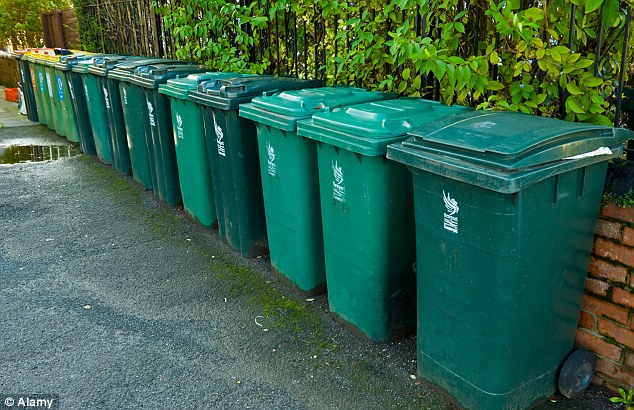
In Australia the way of getting rid of domestic trash in cities is pretty standard: empty your kitchen bin into the wheelie bin outside, and once a week wheel that bin the kerb outside of your home where the “garbos” will empty it into their truck.
Why not give these bins wheels, powered by solar?
The kitchen bin will need to be connected to a power socket, but that in turn can be solar-powered. When it is close to being full, the kitchen bin rolls out to the wheelie bin outside (which is solar powered). A hoist, just like those used by trash trucks, empties the kitchen bin into the wheelie bin.
Once a week the wheelie bin goes for a wander to a local, designated spot. There, the trash truck empties all of the wheelie bins that have queued up, and then they go home.
This is more efficient for the trash truck, especially if it will be self driving in the future.
And it saves humans the tedious task of taking the trash out.