
Food Court – My Restaurant Rules meets Shark Tank

This is a reality TV concept that ticks a lot of boxes!

  • Find a struggling food court, one that has at least two vacancies. Buy it. Buy the property.
  • But only if you manage to buy out the leases of existing tenants. Stagger their exits.
  • Contestants can have experience, even in food courts, but their brand and menu must be substantially new
  • The free rent is genuine and will continue after the show has ended, after a winner is found

You can imagine the TV part – see their stories, watch their problems, have some clock ticking, have mentors. That part is easy.

The mentors though are industry business folk, with money. They (and the show, lines could be blurred about percentages) front up money for fit-out. A strong focus will be on repeatable standardised components. For example, everyone has the same till and ordering system (so sales can be tracked). Equipment like fryers, griddles, bain maries, microwaves and whatever will be the same for each contestant, and remain the property of the food court. The contestants get to spend money on uniforms, menus, initial ingredient stock and so on.

The reality aspect alone will have the food court bursting with customers. So every player will make money, you’d think.

At the end (of the show), the food court continues. The players can carry on and keep running their business, if they choose, or sell it, or shut up shop.

Oh yeah, the mentors and the TV show get a percentage of ongoing turnover during and after the show, and a percentage of the business, should it ever expand or franchise.

From then on, on a two-year cycle, the group with the least turnover in the food court lose their spot, and get no compensation for it. They lose any food court owned equipment. A new group is chosen to replace them and the clock starts again.

Here’s the cool part – after the show ends the food court is gifted to a trust that manages it. Each business keeps on being rent free (but pays their share of overheads), meaning they will always have a price advantage that should keep the food court flourishing.
Better Foods – Supermarket of the Future

There are a variety of supermarket formats that serve various niches:

  • Standard large – sells everything
  • Mini mart
  • Speciality Deli
  • Whole Foods
  • Gourmet

I’m thinking of a new type, which is very focussed on health, food trends, sources and independence + information. Somewhere I would shop, as an older person who is very aware and conscious of the many aspects of food shopping.

I’m thinking like a specialty wine store or library where there are little signs in front of products telling us something special about them. To make our choices easier via the thoughts of like-minded people.

Labelling can tell us about:

  • Origin (country, region, nearby)
  • Nutrition
  • Low fat / sugar
  • Super-food ingredients
  • Minimal packaging
  • Ethical parent company

As opposed to the cheating and lying that mass-producers of food put on their packaging. Ideally, if there are alternatives, the bad brands simply aren’t stocked. A little dangling pamphlet can explain why.

No fresh meat, baked goods or veg – we would encourage people to go to a butcher, baker or greengrocer. Well, some amount of bread would be good. But otherwise, nothing is going off any time soon.

A focus on staples and whole foods, especially where you can fill your own container. While the store might have regular discounts (I’m thinking monthly cycles, not weekly), the big point of difference is savings on staples that are never discounted, like generic tins of beans or bags of flour. 50% off sometimes, with limits on how many. This will be funded from being a non-profit business. We will also hire staff who are disabled, autistic or whatever. And 1% of all revenue goes to the charity of the month.

We want to also serve the poorest of people. Every main product type will have the cheapest version that we can source that isn’t truly terrible, with signage pointing out why it is cheap, the trade-off. For example tinned tuna might be from Thailand and not Canada, with different ethical considerations.

We look at, and share, consumer reviews, especially from the non-profit advisors like Choice in Australia.

The key, what makes this extra-shiny and modern, is we do not sell anything, not a thing, that is ultra-processed. There are exceptions to this… But basically you can trust that nothing we sell will be terribly unhealthy for you.

We will promote products with

  • no artificial colours
  • minimal packaging
  • locally made
  • fewest ingredients
  • lack of fillers

And finally, where possible, we will support small business over corporations. We will show on signage if multiple washing powder brands are made by the same company.

Dual Restaurant Menus

Every restaurant, individual or chain, should have the right to offer a printed menu in whichever style suits them.

But standards are also good, like calorie counts on menu items, and whether they are vegan (or whatever) or not, or allergy info.

So have both. At the restaurant entrance have available a standardised, generic looking menu that tells people who care, everything they need to know. Plus QR codes that provide versions for people with vision problems.

Most people will ignore them, but for those who need such info, it would be very welcomed.

Difficulty Factor of Cooking

Idea: recipes have a difficulty score that is based on science and we all know our level

We love scoring and rating things.

All I have seen from recipes is preparation time and easy/harder.

I propose a 10-point scale set using rules set by cooking experts.

How hard is it to cook this well enough to (relatively) please 80% of eaters? People who typically like everything has their vote discounted, and vice versa…

Factors include timing, cutting skills, number of operations/ingredients, assembly, multi-tasking…

Anything microwaved is 1

Toast is 1.5, if the setting has been worked out

A roast dinner would be 2

A salad 3

A sandwich 4

A soup 5

A pasta dish 6

A pizza 7

A steak is 8

Then use AI to read a recipe and work out how long it takes. 10 point scores for difficulty, hours and minutes for time.

If I know my skill level of 1-10, and the time I have in hand, I can choose a recipe.

The difficulty score methodology is secret. First mover advantage and the “secret” keep it as the standard trusted score.

A souffle is 9

Anything not already done is a 10

Uber Eats etc will die and come back

Here in Australia restaurant meal deliveries are a big hit, and just like Uber’s taxi service, it is only the consumers that win.

The delivery drivers suffer very low wages because they are not actually employees and not subject to a minimum wage. They also have high pressure to perform or else lose the gig.

Restaurants are paying large fees to get their food delivered, and suffering less table service, which is definitely more profitable for them.

Uber Eats etc are running at losses to gain market share.

Prediction: In Australia and maybe other countries like the USA, new laws will forbid single purpose gig companies from using contract labour. Such companies will struggle to fight this, because they would have to admit they don’t provide a minimum wage. And when the law comes in, Uber Eats etc will quit the game.

Then, because people have become so used to restaurant food, they will return to eating out, and levels of restaurant patronage will be higher than ever.

Then, when robots start doing deliveries everywhere, we will return to eating at home, and the deliveries will be substantially cheaper to provide, benefiting all…

…except we need to find jobs for the delivery drivers who are typically unskilled or recent immigrants.

2/3 Not

Restaurant idea. Guarantees that there will be:

  • Sweets and Desserts with less than 33% sugar
  • Main meals with less than 33% carbs

That’s it. Easy to understand and easier than most diets

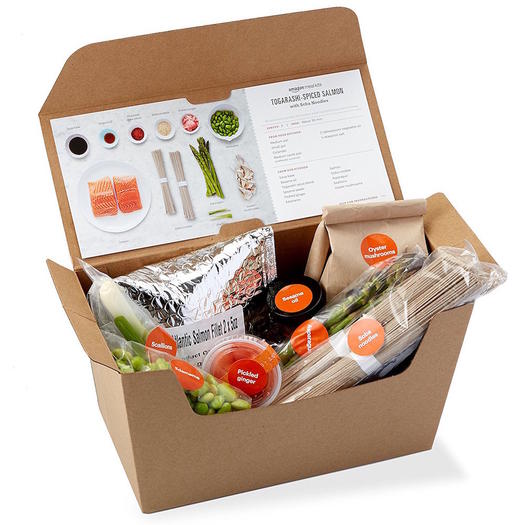
Delivered Meal Kits: Doomed to Fail

meal_kit

Meal kit companies won’t last. Well, I guess one might, after buying out some others and offering a huge range. And maybe one more if it targets the wealthy. But the others won’t.

No first mover advantage. It is the opposite. With time many people will want to try something new, and will move to a new service offering a bargain first few weeks. Food is like fashion, it has frequent change, especially at the low end.

Delivery doesn’t suit everyone, especially those in apartments.

Not profitable. I guarantee that all the current services are breaking even or losing money. When they put up their prices, people will leave. And any economy of scale from getting more customers will be lost by delivering to them – as they have all started where delivery is the cheapest.

Fad. Just like diets, a lot of current customers are experimenting with a new of doing things, but will soon resort to their old ways.

Supermarkets. Even here in Australia, they have started stocking meal kits. No subscription required!

The future – small stores, conveniently located, that sell meal kits and gourmet frozen meals. Yes, 7/11 etc could stock them, or they could be standalone specialist stores. People will pay a premium to not be in a subscription. Not being subscription means  not knowing how many of each to stock. So you stock less so that by a certain time you have run out, and some customers don’t get to buy. This works if the food is desirable enough. And anything that hasn’t sold by 8pm is half price.

Hybrid Food Service

There are many “food kit” delivery services, where all the ingredients arrive, chopped up, and you cook them.

For me that’s a once a week thing – every other night I want it easier.

Here’s the plan, but it can be altered to suit…

1 food kit per week
3 “just microwave me ” meals per week
Supermarket vouchers for healthy stuff

Your commitment to cook is once per week. When you shop at the supermarket, you want the healthy bargains. Lazy nights are covered by the microwavable but healthy meals.

People need to cheat, and if the cheating is also healthy, that’s a win

Dark Kitchens+

(I had this idea before I heard of dark kitchens – it is the same idea, but modular, like a prefab school building)

Future: more food deliveries to homes, less eating within inexpensive restaurants.

Problem: certain products, like burgers, don’t travel well and don’t easily stay hot
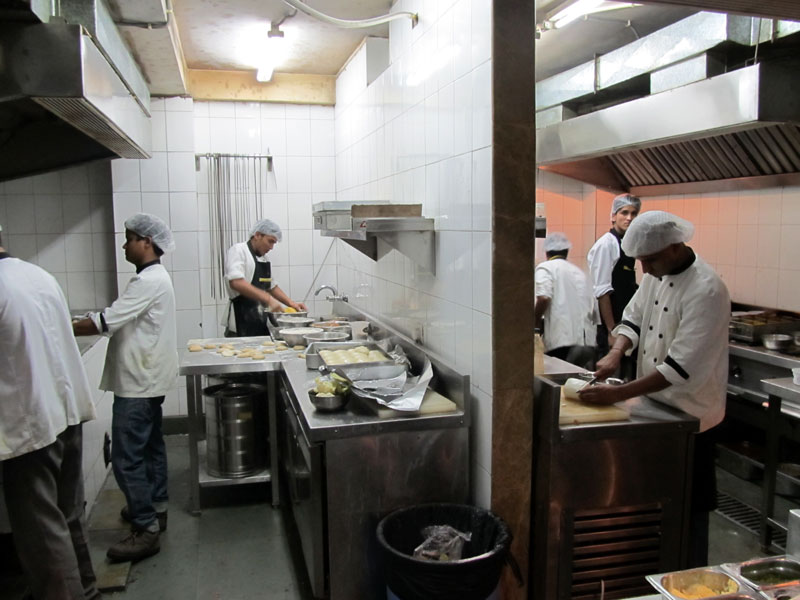
Solution #1: use industrial premises that are near residential. Lower cost buildings because they are purely cooking and delivery. No seats, no toilets, no public parking.
Solution #2: create self-contained kitchens that can fit in a garage. They use portable gas and the only external connections required water and exhaust.
Result: food created affordably, sold at eat-in prices, delivered quickly.
Possible issues: parking for deliveries and deliverers. Waste.
Advantages: a kitchen-in-a-box can be mass-produced to the standards of a major fast food player, and deployed (or redeployed) in days. Can also be used for food-truck scenarios.

Kitchen in a Box

commercial_kitchen_large

Future: more food deliveries to homes, less eating within inexpensive restaurants.

Problem: certain products, like burgers, don’t travel well and don’t easily stay hot.

Solution #1: use industrial premises that are near residential. Lower cost buildings because they are purely cooking and delivery. No seats, no toilets, no public parking.

Solution #2: create self-contained kitchens that can fit in a garage. They use portable gas and the only external connections required water and exhaust.

Result: food created affordably, sold at eat-in prices, delivered quickly.

Possible issues: parking for deliveries and deliverers. Waste.

Advantages: a kitchen-in-a-box can be mass-produced to the standards of a major fast food player, and deployed (or redeployed) in days. Can also be used for food-truck scenarios.